The Right Stuff

The Right Stuff

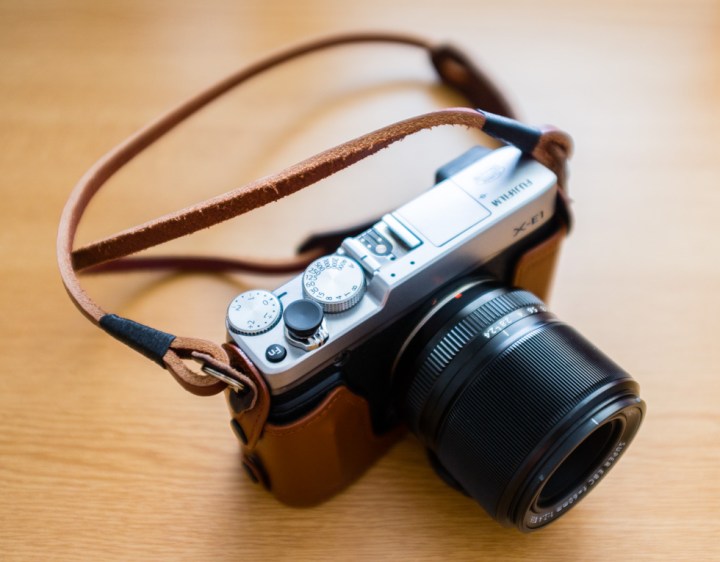
There’s no denying that Fuji’s retro styled cameras are things of beauty as well as incredibly powerful photographic tools. With that in mind, when it comes to customising them to personalise and improve their ergonomics, it behooves us to complement rather than degrade that classic look.

The X100 Spoiled Me

I got my X100 secondhand on eBay, at the time for a very respectable sum of £659. It came with every accessory you could want – the leather case, the lens hood, soft release and even a Thumbs Up grip. After totting up the value of these accessories I was initially sorely tempted to put them up on eBay and just keep the X100 itself, but I quickly realised they really complemented the camera, not just visually but practically. The case protects the camera from knocks and scuffs and keeps off light rain. The Thumbs Up grip significantly improves the handling, making one handed operation much better. The lens hood is of course essential, especially with the X100’s lens being a little prone to flare. Although mainly it provides some protection to the front element and provides a useful 49mm filter ring. The only accessory I didn’t find myself using was the soft release, which has stayed in a drawer until recently finding a home on my X-E1.

As I got my X-E1 new I didn’t have the luxury of having several hundred pounds worth of accessories thrown in. Initially I tried my X100’s Thumbs Up on it as the top plate has basically identical dimensions. It fitted reasonably although needed to protrude a little further to mount properly. I quickly decided it was unnecessary. The bare X-E1 has better ergonomics than the X100 right from the outset and its larger lenses deter one handed use in my experience.

Half Case

When it came to getting a case I looked at some of the 3rd party half cases but decided to stick to Fuji in the end. The X100 leather case is lovely and very nicely made. Its main short comings are lack of a tripod mount and no access to the memory card and battery slot. The X-E1 half case fixes the most serious issue by making the memory card and battery slot accessible through a little flap. The X-E1 case also significantly improves the finger grip on the right side of the lens, giving you a better hold on the camera.

Where the X-E1 case falls down, is the supplied strap. To put it bluntly, it’s a piece of crap. The leather backed part is far shorter than the X100 version, the backing is cheap, plasticy and rough edged. I decided I needed to find a 3rd party strap to replace it almost immediately.

Neck Strap

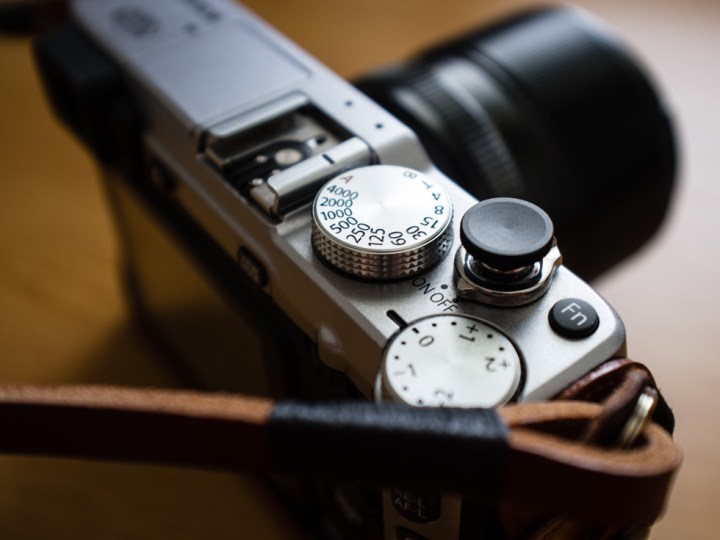
I learned about Gordy’s Camera Straps from the excellent Fuji X Files blog. They custom build leather camera straps, letting you pick the exact length, colour, neck pad and lug covers. I was impressed with how reasonable the price was and decided to order myself one. I’m glad I did because it’s an excellent strap. Thick leather, very nicely finished. As with all leather goods it takes a little while to break-in, but after only a few photo walks it’s already becoming nice and supple.
DSCF0719

Soft Release

As I previously mentioned, I didn’t find the soft release necessary on my X100. The shutter button is big and comfortable enough to use unadorned. However the shutter button on the X-E1 seems slightly smaller and something about it doesn’t feel quite as sure beneath my finger. The soft release nicely corrects that and provides a big concave surface to rest my fingertip against. The shutter button is such a critical part of a camera getting the right feel is important.

Other bits and pieces

As a former Nikon shooter I’m used to having scuffed bits of plastic screen protectors on my cameras. With the X100 I didn’t bother, the full case keeps the screen well protected and I’ve yet to put the slightest mark on it. With the X-E1 I’ve not been quite so lucky and managed to put a slight scratch on the screen after just a couple of months. I’ve since bought a Swido Diamond Clear hard screen protector that is doing an admirable job of protecting it from further damage.

The other must have accessory for your Fuji camera is a bit less glamorous but critically important – spare batteries! The Fuji’s like to chomp through batteries at a speed that will shock DSLR owners who are used to weeks if not months between charges. I’ve got several generic spares for my X100 and a single spare for my X-E1. You can buy official batteries if you like, but I’ve not had any problem with generic ones.

Project: Alexandra Shed

Project: Alexandra Shed

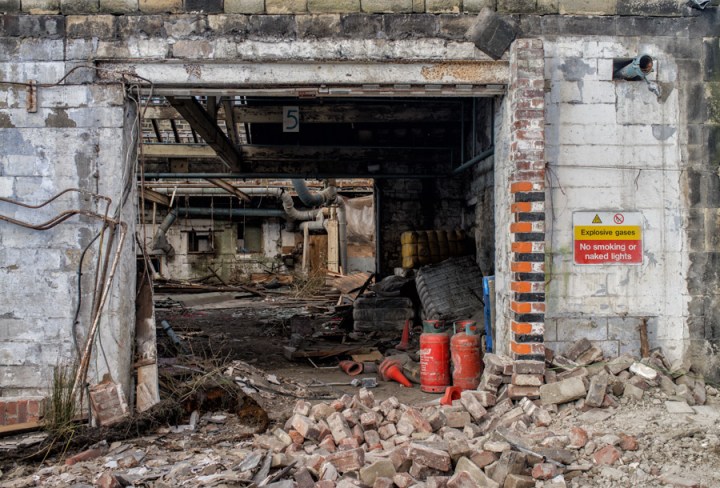
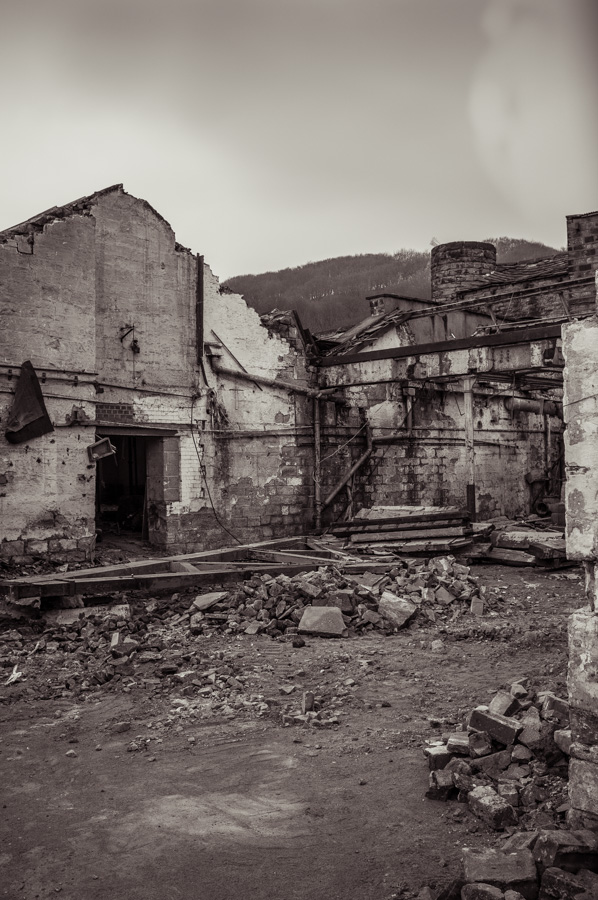
Shed is rather a diminutive term, but Alexandra Shed was the last remnant of Hawksclough Mill. A large cotton (or woollen) mill on the edge of Mytholmroyd on the bank of the Rochdale Canal in West Yorkshire, that had stood there since the mid-1800s. When I saw it was starting to get demolished I realised I had a unique opportunity to preserve a little bit of West Yorkshire’s industrial heritage through my photography. All shots taken from public rights of way.

DSCF8349
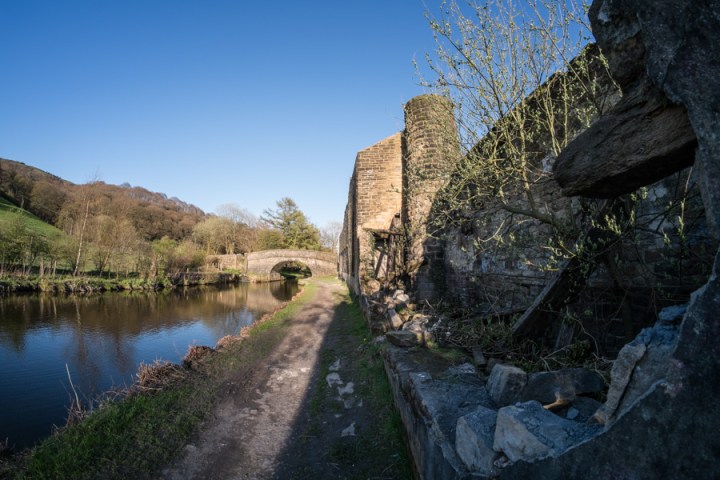
X-E1, 18mm f5.6 1/550 sec

The mill from the canal side, showing the oldest part of the remaining mill building. The part demolished chimney just pokes up above the roof at the rear. The old mill chimney had been taken down while the building was still in use, presumably for safety reasons.

DSCF5727-Edit
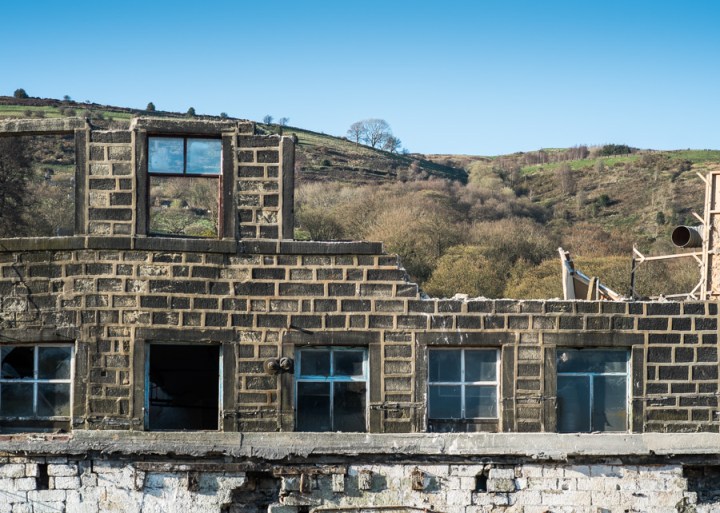
X100, 23mm f4 1/80 sec

From the road side you could look in on the part of the building that saw the most recent use with what appears to be a little old stock left behind from the former blenders and slitherers.

DSCF8360
X100, 23mm f5.6 1/90 sec

DSCF8346
X-E1, 60mm f5.6 1/40 sec

The view further back in the building is revealed as the demolition crew work back from the road side. That rear wall is part of the original 1800s mill building. Note the old windows and doors had been blocked off.

DSCF8713
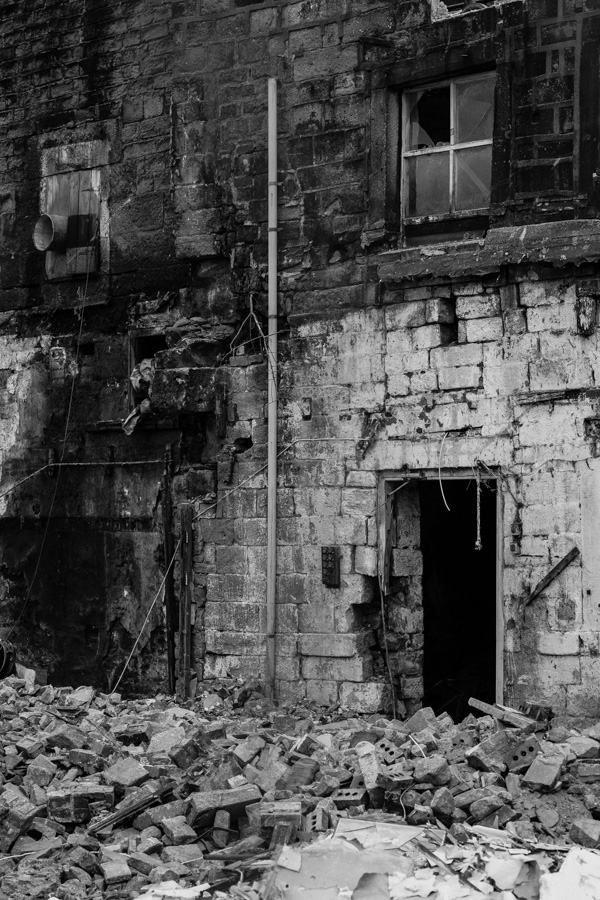
X100, 23mm f5.6 1/40 sec

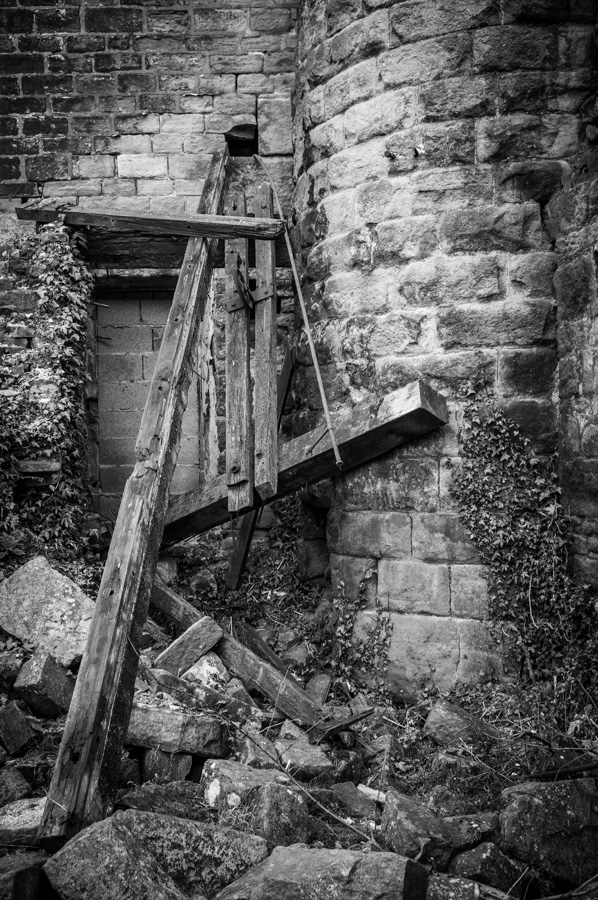
From the canal side at the base of the chimney where part of the rear wall had collapsed. Note the old pulley wheel on the collapsed wooden framework.

DSCF8854
X-E1, 60mm f5.6 1/240 sec

I’d hoped they might repurpose the old mill building once the more recent part had been stripped away, but sadly it too came down brick by brick.

DSCF8871
X-E1, 8mm f8 1/150 sec

The building had been derelict for quite some time and part of the back wall had collapsed, allowing nature to start to reclaim the land.

DSCF8902
X-E1, 60mm f5.6 1/125 sec

DSCF9022-Edit
X100, 23mm f5.6 1/90 sec

DSCF9468
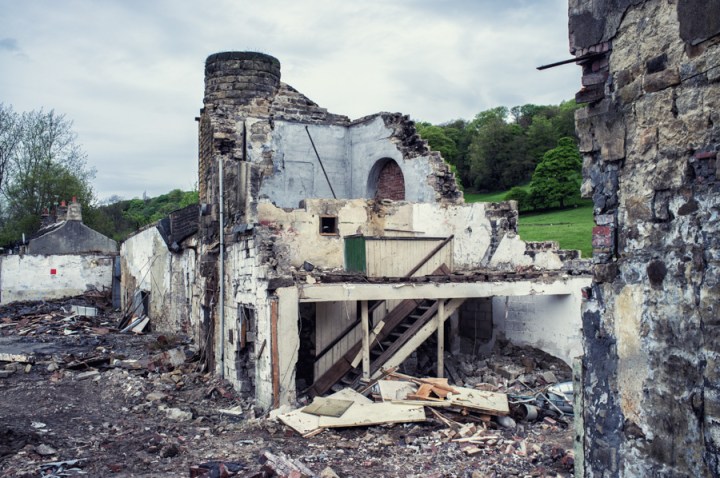
X-E1, 60mm f5.6 1/125 sec

With the middle of the building ripped away the well worn staircase is in plain view. Note the fold down side boards that presumably made it possible to raise or lower carts without needing a lift. You can see a mangled cart in one of the early shots above.

Today nothing of the old building remains apart from a 1 story high wall composed of the old mill’s rear wall. Where it had collapsed its been repaired with reclaimed stone. The old windows and doors all bricked in. Now Alexandra Shed is just a memory for those who once worked there and who passed it in their daily travels. If you know anything more about this old mill I’d love to hear from you, get in touch.

Old Lenses, New Tricks

Old Lenses, New Tricks

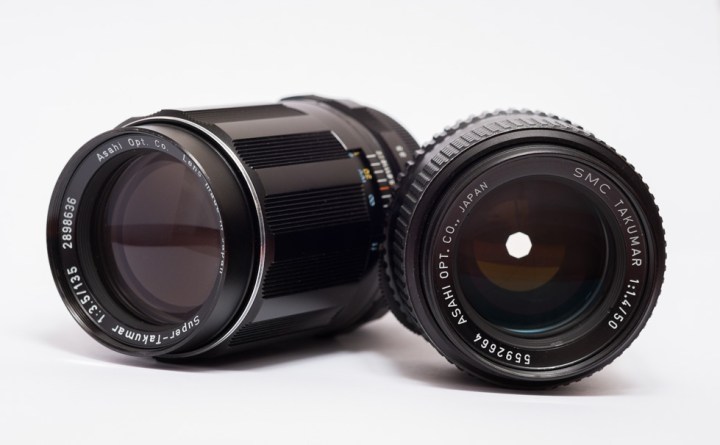
When I got my X-E1 I decided to get a mount adapter so I could try out some old film lenses to open up some more creative possibilities. After a bit of research it seemed like m42 screw mount lenses would be ideal. They’re cheap and plentiful as the mount was popular across a wide range of cameras for several decades. I mentioned to my Dad I was interested in getting some m42 lenses and it turned out he had some near mint condition Pentax Takumar’s from his college days. So I took possession of a 50mm f1.4 SMC Takumar and 135mm f3.5 Super Takumar. These old lenses were made at just the right sort of time to have damn good optics and have basic lens coatings which help minimise flare and improve contrast.

DSCF0581Summer, 135mm, 1/500 sec

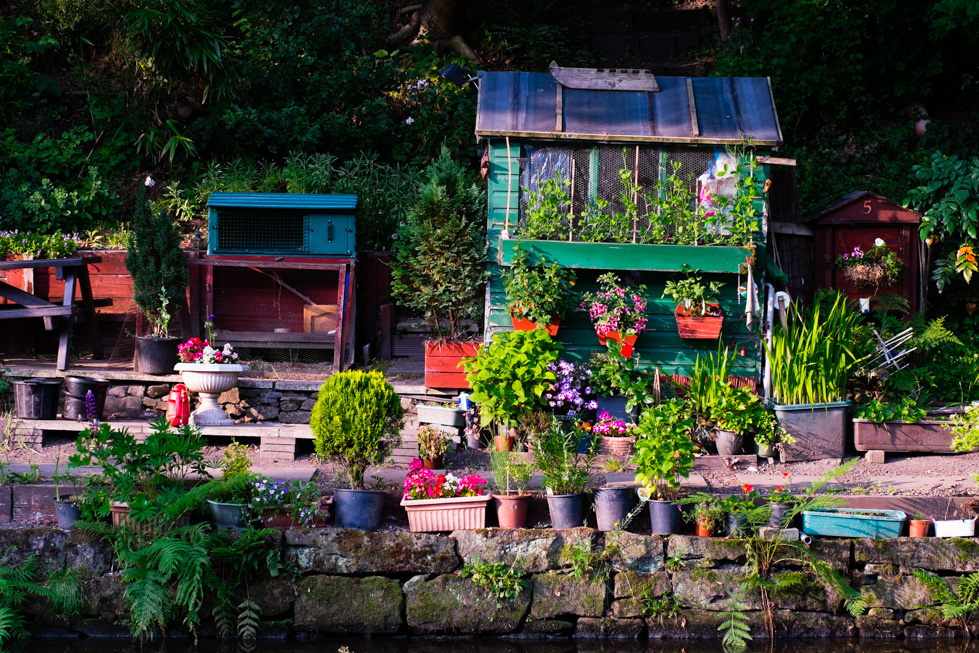
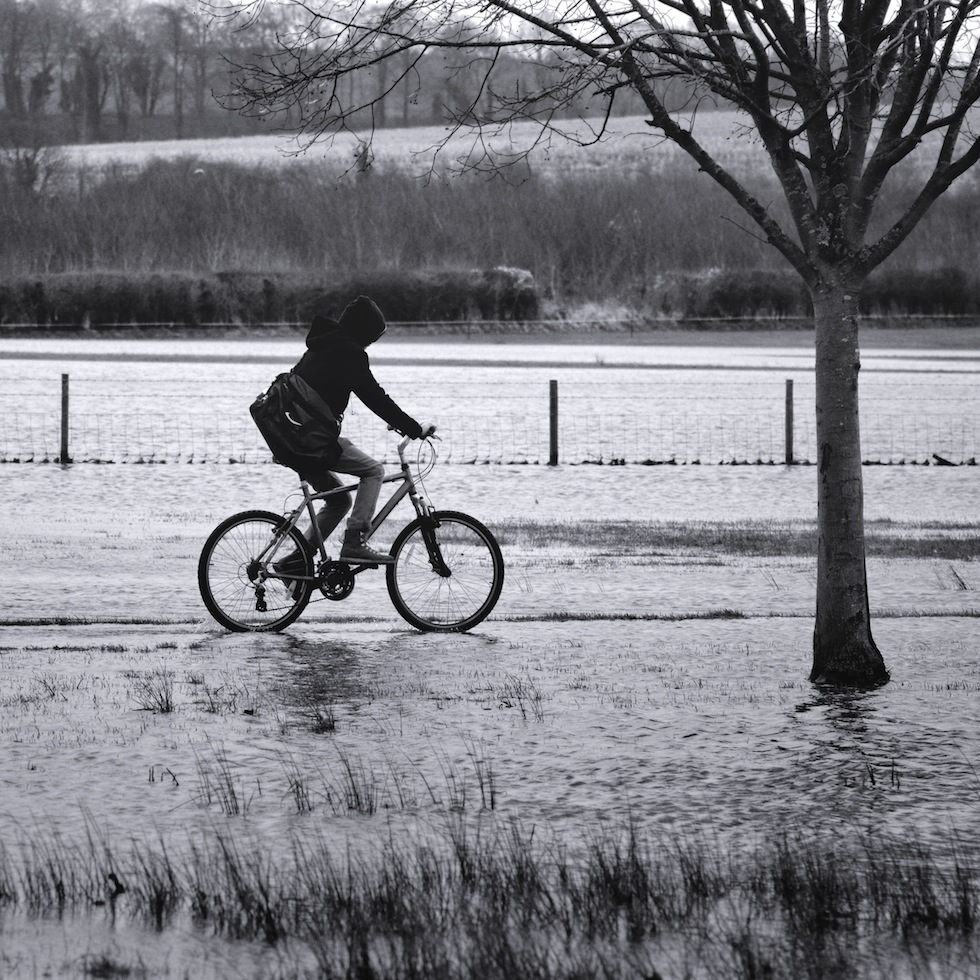
Both lenses have nice bokeh, the 50mm in particular. The 135mm can show some quite pronounced bokeh fringing wide open so is best used stopped down slightly, at least if being used for a colour shot. It’s impressive how sharp they both are considering their age and the demands placed on them by a 16 megapixel APS-C sensor.

DSCF0859Canalside Garden, 50mm, 1/100 sec

I find focusing the lenses fairly straight forward using the magnified view to check for critical focus.  The X-E1’s 2.0 firmware which added focus peaking definitely makes things easier still. Shooting moving subjects is undoubtedly a challenge so you need to carefully consider your composition and pre-focus as much as possible. The 135mm’s focus ring requires a considerable amount of turning to go through its range which has the advantage of making focus very accurate, but the downside that it can be frustratingly slow if you’re in a hurry.

DSCF5514Impervious to Water, 135mm, 1/320 sec

There are lots of great m42 lenses out there that are easy to adapt to use on mirrorless cameras (and less easily on Canon and Nikon DSLRs). If you stick to names like Pentax and Zeiss you won’t go far wrong. Of course there are plenty of super cheap lenses from obscure branded Russian, Japanese and German companies and some may be fantastic, but it will be a lot more hit and miss. The older a lens is the more likely it will have performance issues on today’s cameras, so if you want a lens not just to use as a toy or special effect purchase, go for a later model with coated glass. Also beware of dust and fungus – never buy old lenses from sellers who don’t show you the innards or at least guarantee the glass is clear. A few dust spots won’t hurt and are inevitable, but fungus and other nasties will degrade the optical quality. Also make sure aperture rings are functional as they can seize up after decades of inactivity. On auto m42 lenses you may need to adjust the auto/manual switch before the aperture will close so beware of that.

Armley Mills

Armley Mills

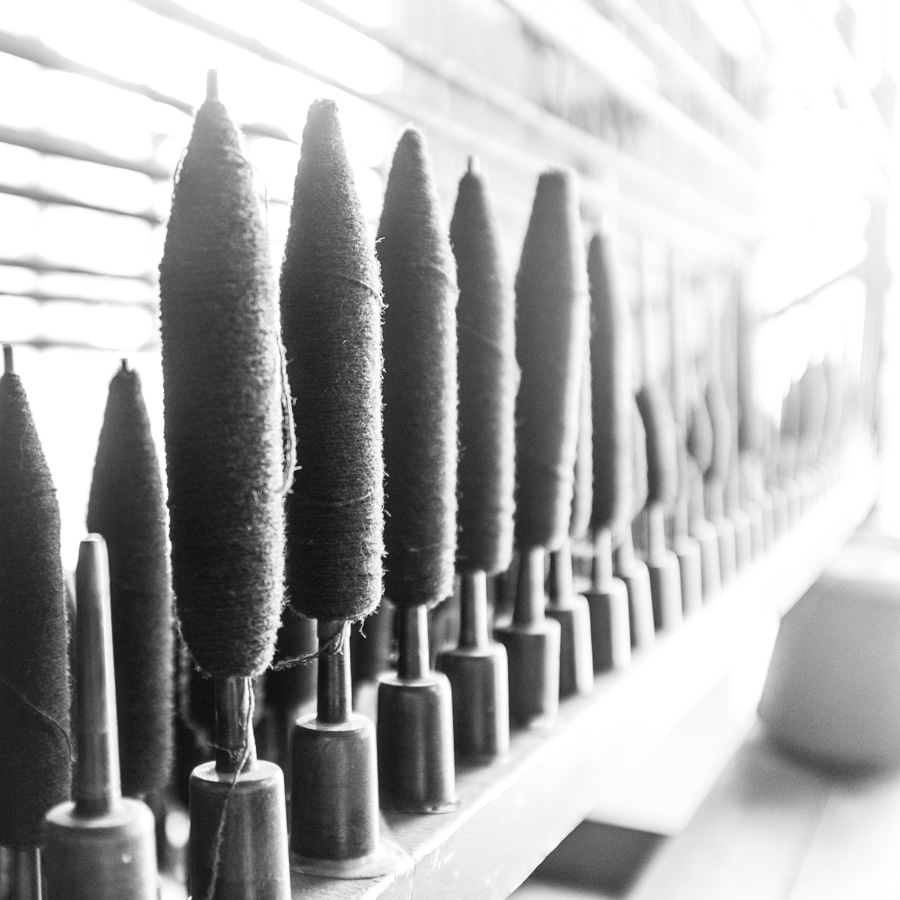
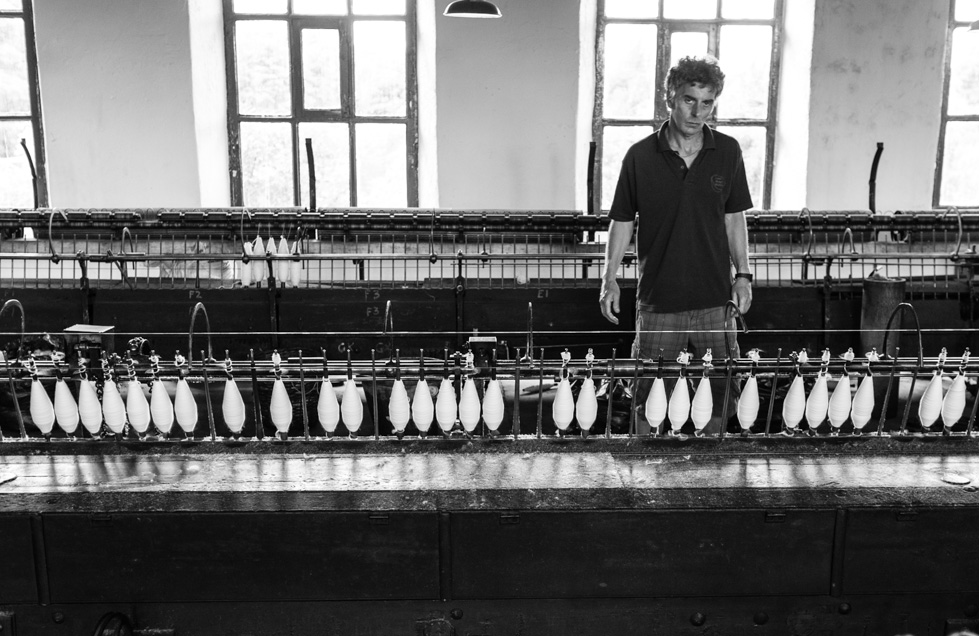
Spinning Mule, 23mm, f4, 1/20 sec

 This past weekend I had the opportunity to explore Armley Mills, an industrial heritage museum on the outskirts of Leeds in West Yorkshire, England. With a plethora of old machinery preserved inside including the amazing spinning mule, pictured above, the mill is a treasure trove. It was fairly dark inside and with bright sunlight streaming in through the windows, exposure was a little challenging, that said the overall light was wonderful. The muted colours inside and strong contrast lent itself beautifully to black and white. All pictures were captured with my X100.

DSCF0579
Bobbins, 23mm, f2, 1/125 sec

DSCF0568
Working the Mule, 23mm, f2.8, 1/125 sec

DSCF0638
Empress Works Pully, 23mm, f2.8, 1/60 sec

Onomichi City

Onomichi City

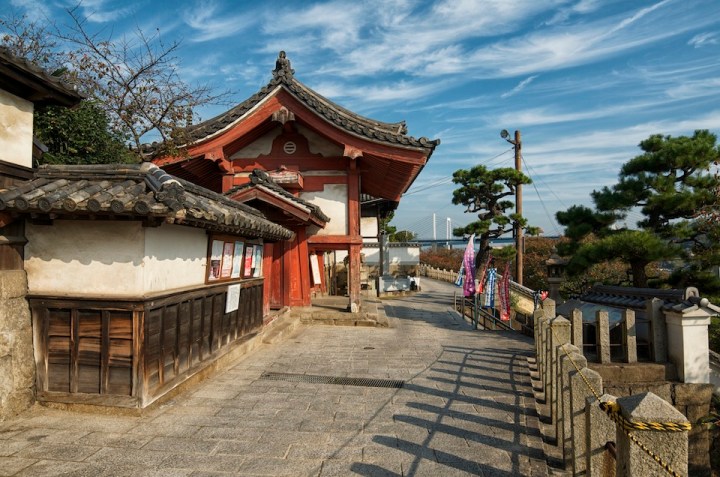
Onomichi is a small city in southern Japan that lies on the coast of the Seto inland sea in Hiroshima Prefecture. It’s famous for its many temples and steep narrow streets. I took these photos while exploring the city in early November 2011 with my Nikon D7000. I had my 70-300mm f4.5-5.6 zoom with me but mostly used my Samyang 14mm f2.8 and Nikon 35mm f1.8.

_DSC1399
Onomichi Backstreets, 35mm, f5, 1/160

The winding backstreets are  tightly packed with buildings, mostly homes with a few shops, bars and restaurants. Many streets like this were so narrow even a small Japanese car couldn’t hope to fit.

_DSC1447
Saikokuji Temple, 14mm, f8, 1/500

I was a little early for the autumn leaves but you can still see a few turning here at this hill top temple.

_DSC1474
The Last Temple, 14mm, f8, 1/320

The last of 25 temples on Onomichi’s temple walk. I think I missed one or two on the way, but it was satisfying to finish here, thankfully at the bottom of the hill.

_DSC1499
Onomichi boats, 35mm, f4.5, 1/640

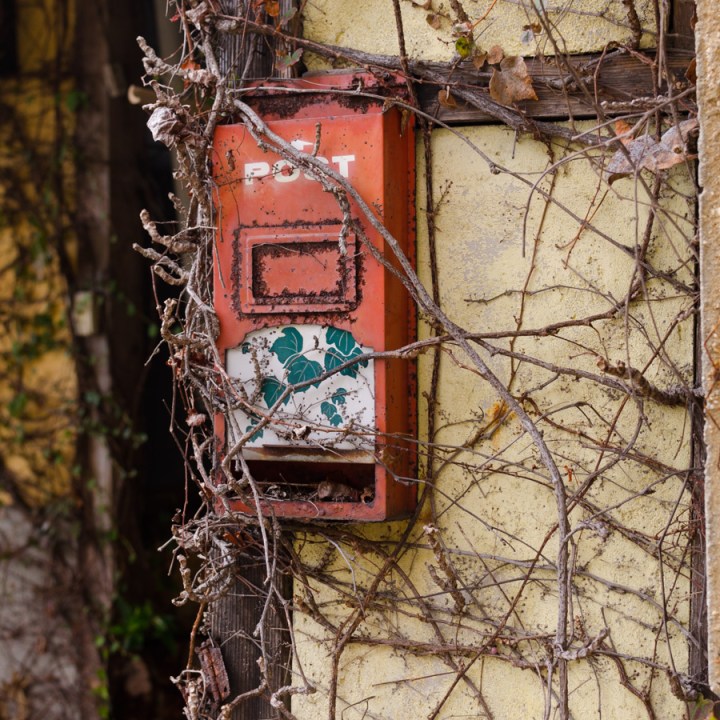
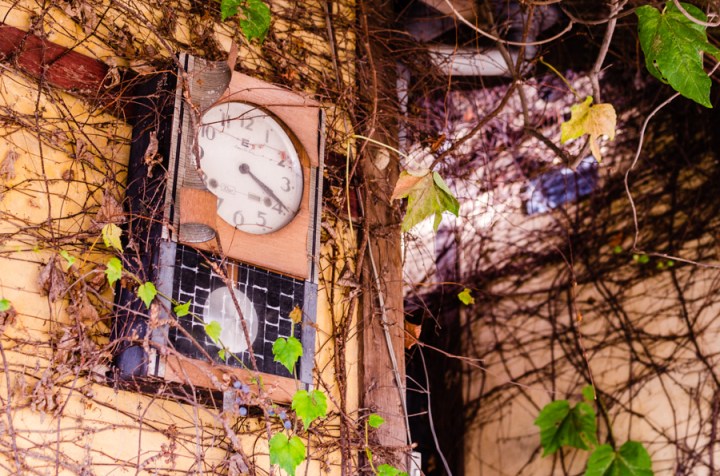
Behind the temples amidst the tightly packed houses in the back streets high on the hillsides are a number of derelict old homes which are being allowed to slowly collapse. With doors missing or fallen in and even whole walls having simply buckled and fallen away it’s not hard to catch a glimpse inside without having to put yourself in any danger (you really don’t want to be exploring collapsing old wooden structures thousands of miles from home no matter how good your travel insurance is).

_DSC1320
Nature mirrors art, 35mm, f5, 1/160

_DSC1316
Time stood still, 35mm, f5, 1/160

_DSC1275
House of faded stickers, 35mm, f4, 1/100

The stickers in this old ruin caught my eye, things like this more than just the old detritus hint at who might have once lived here. A cat lover and basketball fan perhaps? What would they make of their home now, rotting and falling apart?


Welcome to Light Priority

Welcome to Light Priority

Welcome to Light Priority, a place to showcase, sell and talk about my photography and gear. I’m still in the process of fleshing out the site so don’t be surprised if new sections pop-up, disappear or get moved around. Hopefully you’ll join me on this journey as I try and turn my hobby into more of a business. I’m not expecting to get rich, but it would be great if it could at least supplement my income and help pay for new equipment. I’m hoping to sell prints and postcards and you’ll also be able to help the site by clicking affiliate links. I’m also open to the idea of sponsorship and if you’d like to send me some camera gear to review that would be awesome.

If you’d like to get in touch or submit feedback you can use the Twitter  or drop me an email to rory @ lightpriority.net. A proper contact page will be added soon. To keep the noise down I won’t be allowing comments on pages or posts but I still welcome feedback.